
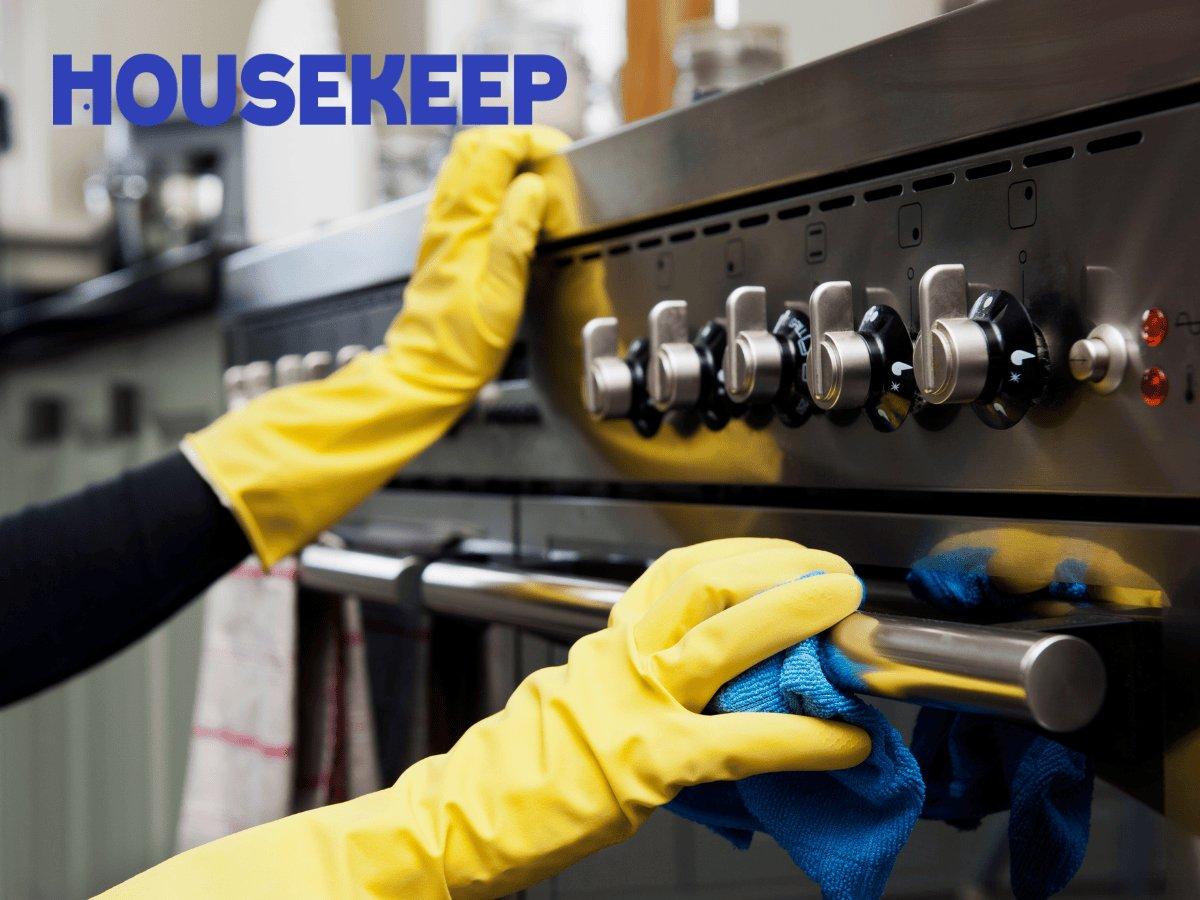
Understanding how self-cleaning ovens work can help you keep your oven in good condition and prevent grease from building up over time.
How self-cleaning ovens work
Most self-cleaning ovens use a process called pyrolytic cleaning. During this cycle, the oven heats up to extremely high temperatures — often above 400°C.
At these temperatures, grease, food splatters and carbon deposits are burned away and reduced to a fine ash.
Once the cleaning cycle is complete and the oven has cooled down, you simply wipe away the ash with a damp cloth.
This process can remove a large amount of residue from inside the oven without the need for strong chemical cleaners.
Parts of a self-cleaning oven that still need cleaning
Even if your oven has a self-cleaning function, there are still several areas that need occasional manual cleaning.
These include:
- Oven racks and trays
- The oven door glass
- The rubber door seal
- The exterior surfaces and control panel
Many manufacturers recommend removing oven racks before running a self-cleaning cycle, as the extreme heat can damage their finish.
These racks usually need to be cleaned separately using warm water and washing up liquid.
When to use the self-cleaning cycle
Self-cleaning cycles are designed for deeper cleaning rather than everyday maintenance.
Most households only need to run the cycle occasionally, such as every few months or when noticeable grease buildup appears inside the oven.
Running the cycle too frequently may not be necessary and can use a significant amount of energy.
Regularly wiping up spills and food splatters after cooking can reduce how often a deep cleaning cycle is needed.
When manual cleaning may still be needed
While self-cleaning ovens are effective, they may not remove every type of residue.
For example, thick grease layers or food that has baked onto oven surfaces over time may still require some manual cleaning.
Using mild cleaning solutions such as warm water with washing up liquid or baking soda paste can help remove remaining marks.
Always check your oven manufacturer’s instructions before using cleaning products inside the oven.
When to consider professional oven cleaning
If grease and carbon deposits have built up significantly, professional cleaning can be the easiest solution.
Professional oven cleaners use specialist tools and powerful but food-safe cleaning products designed specifically for ovens. Many services also remove racks and trays and soak them in professional dip tanks that dissolve stubborn grease.
This type of cleaning can restore heavily used ovens and make future maintenance much easier.
If you'd prefer to leave the job to an expert, you can book professional oven cleaning through Housekeep.