
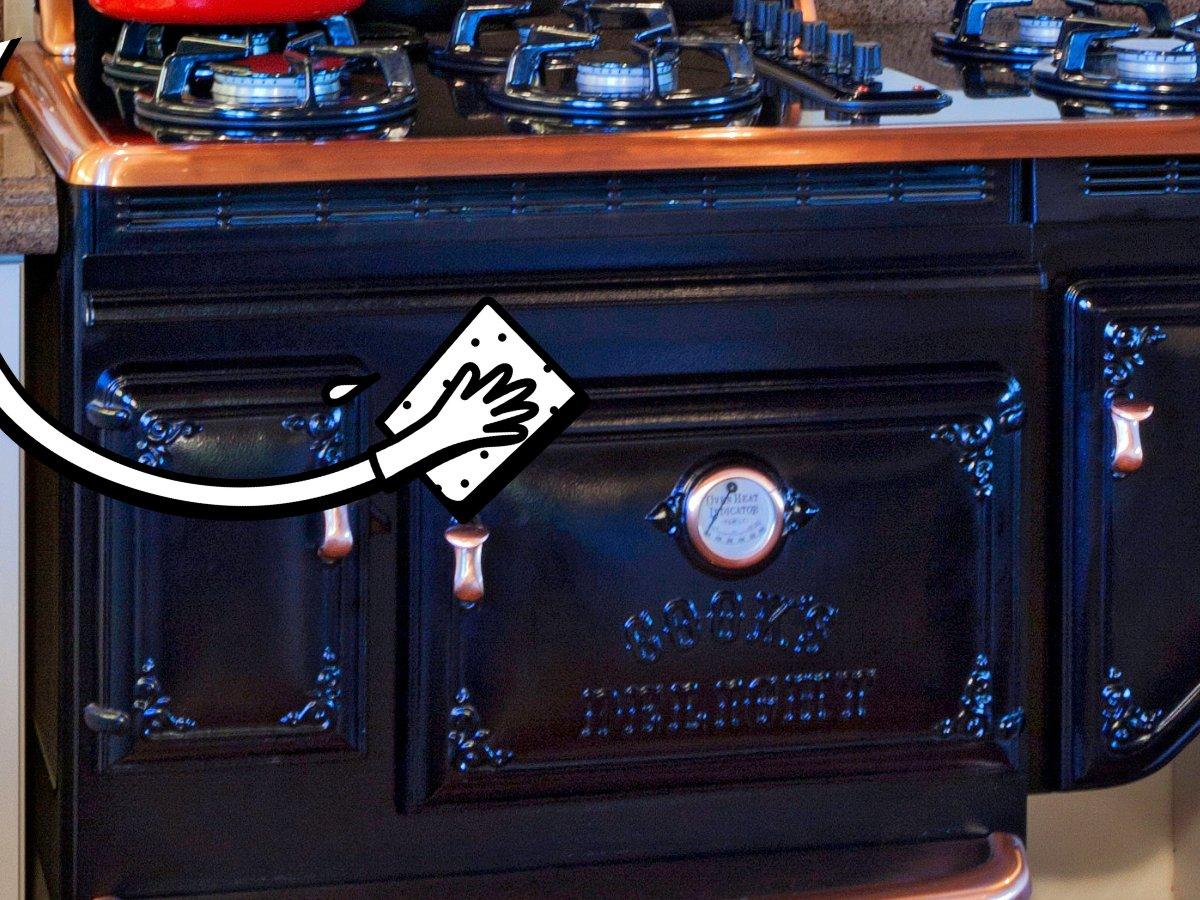
The best way to clean an AGA depends on which parts of the cooker you’re cleaning, as the hotplates, ovens and enamel surfaces each require slightly different care.
Clean AGA ovens using heat and brushing
One of the advantages of an AGA cooker is that the high internal temperatures help prevent grease from building up inside the ovens.
Most of the time, food splashes and residue dry out and turn into a light ash that can simply be brushed away.
Once the oven has cooled slightly, you can use a soft brush or cloth to remove loose crumbs and ash from the oven floor and shelves.
Because AGA ovens are made from cast iron, manufacturers usually recommend avoiding harsh oven cleaners or abrasive chemicals that could damage the interior surfaces.
Clean AGA oven shelves and trays
Oven shelves and trays should be removed periodically for a deeper clean.
You can wash them in warm water with washing up liquid to dissolve grease and cooking residue. If necessary, use a non-scratch sponge or soft brush to remove stubborn marks.
After cleaning, dry the shelves thoroughly before placing them back in the oven.
Cleaning AGA hotplates
The hotplates on an AGA cooker can collect spills from cooking and boiling.
Food spills should be wiped away as soon as possible once the plates have cooled slightly. A damp cloth or mild washing up liquid solution usually works well.
If burnt residue has formed, a soft brush or nylon pad can help remove it without scratching the surface.
Avoid pouring water directly onto very hot plates, as sudden temperature changes can damage the enamel.
Cleaning the enamel exterior
The glossy enamel exterior is one of the most recognisable features of an AGA cooker.
To keep it looking its best, wipe the surface regularly using a soft cloth with warm water and a small amount of washing up liquid.
Stubborn marks can usually be removed using a gentle kitchen cleaner designed for enamel surfaces.
Avoid abrasive scouring pads or harsh cleaners, as these can dull the finish.
How often should you clean an AGA?
AGA cookers generally require less deep cleaning than conventional ovens because their constant heat helps burn away grease and food residue.
However, it’s still helpful to wipe spills regularly and clean shelves and trays every few weeks to prevent buildup.
A deeper clean of the exterior and removable parts every few months will help keep the cooker in good condition.
When to consider professional oven cleaning
If grease has built up inside the ovens or on hard-to-reach areas of the cooker, professional cleaning can make the job much easier.
Professional oven cleaners use specialist tools and food-safe cleaning products designed to remove grease and carbon buildup without damaging oven surfaces.
Many services also remove racks and trays and clean them separately using professional soaking systems.
If you'd rather leave the job to an expert, you can book professional oven cleaning through Housekeep.