
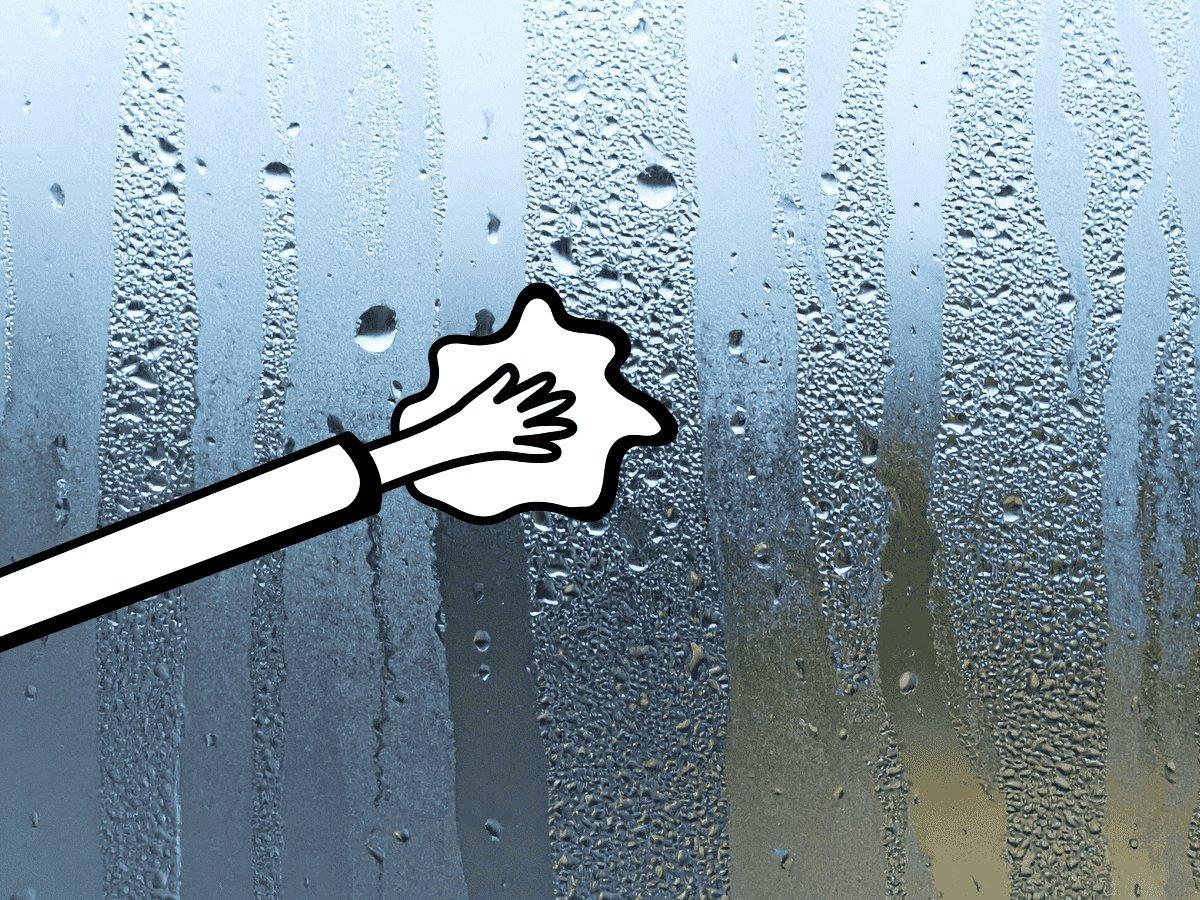
What causes condensation on windows?
Condensation forms when warm, moist air comes into contact with a colder surface, such as window glass. The air cools down and releases moisture in the form of water droplets.
This is most common in winter, when indoor air is warm but windows are cold due to lower outdoor temperatures.
Everyday activities such as cooking, showering, drying clothes indoors and even breathing can all increase moisture levels in your home.
How to remove condensation from windows
If condensation has already formed, there are a few simple ways to remove it quickly:
1. Wipe down the glass
Use a clean, dry microfibre cloth or towel to wipe away moisture from the window surface. This is the quickest way to deal with visible condensation.
2. Use a squeegee
A squeegee can help remove water more effectively, especially on larger windows or glass doors.
This can also help prevent streaks or water marks from forming as the glass dries!
3. Open windows to improve airflow
Opening your windows, even for a short period, can help reduce humidity levels indoors by allowing moisture to escape. This is particularly effective after activities that generate steam, such as cooking or showering.
Making this part of your daily routine can help prevent condensation from building up on your windows.
4. Turn on extractor fans
Extractor fans in kitchens and bathrooms help remove moist air before it spreads throughout your home. Using them regularly can significantly reduce the amount of condensation that forms on windows.
For best results, turn on extractor fans while cooking or showering and leave them running for a short time afterwards to clear any remaining moisture.
How to prevent condensation in the long term
While wiping down windows and turning on your extractor fan helps in the moment, preventing condensation is the most effective long-term solution.
1. Improve ventilation
Good airflow is key to reducing moisture. This can include opening windows, using trickle vents, or ensuring air can circulate freely throughout your home.
2. Reduce indoor moisture
Simple changes can help lower humidity levels, such as:
- Drying clothes outdoors or using a dryer where possible
- Keeping lids on pans when cooking
- Closing bathroom doors when showering
3. Maintain a steady temperature
Keeping your home at a consistent temperature can help reduce the difference between indoor air and window surfaces, which can limit condensation.
4. Use a dehumidifier
Investing in a good dehumidifier can help remove excess moisture from the air, particularly in rooms where condensation is more common.
Many heavy-duty dehumidifiers can be left running throughout the day and will automatically adjust their settings based on humidity levels, helping to maintain a more consistent humidity throughout your home.
When condensation might be a bigger issue
In some cases, condensation can indicate a wider problem.
If you notice persistent condensation between double-glazed panes, this may suggest a broken seal. Similarly, ongoing condensation combined with mould growth could point to poor ventilation or high humidity levels.
In these situations, it may be worth looking into longer-term solutions such as improving insulation or ventilation systems.
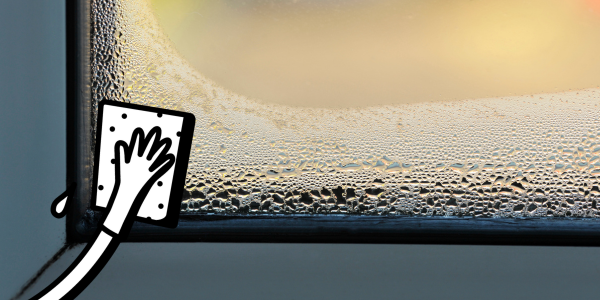
Does window cleaning help with condensation?
Window cleaning doesn’t prevent condensation directly, but it can help reduce the impact.
Clean windows are less likely to develop visible streaks or marks when condensation forms and dries. Removing dirt and residue also makes it easier to wipe away moisture.
Regular window cleaning can help keep your glass clear and improve overall appearance, even in homes where condensation is common.